|
|
|

Topics in this section: work and trade | leisure activities | hunting and fishing | food and drink | health and wellbeing | dress
A great deal of information has survived concerning the diet of Ancient Egyptians, both in the preserved remains of various foods, and the depictions of food, food processing and consumption found in temples, tombs and papyri.
Bread and beer ...
 |
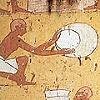 |
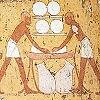
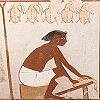
Bread and beer were the two staples in an Egyptian's diet. Both were made in a similar way, using emmer wheat or barley. Grinding the wheat and barley was an incredibly laborious daily process, carried out on an arrangement of stones and usually by the women.
|
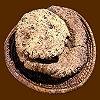
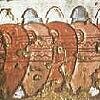
| Bread was eaten with every meal and was made in the home until around the New Kingdom, when bakeries became common. Loaves were made in various shapes and sizes, and those intended for ritual use would usually be made in moulds. Bread formed the centrepiece of offering scenes in tombs, where it was usually portrayed in rows of long slices on the table. |
 |
 |
 |
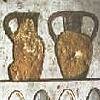
Women also made the beer, mixing the bread dough with yeast and leaving it to ferment in large vats. A few weeks later, the resulting "mash" was filtered and strained before drinking. It was thought that spices and fruits were added to flavour the beer, however recent research has found this may not have been the case.
|
Meat and fish ...
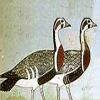
| The lavish banquets of the wealthy Egyptians are well documented, with party revellers feasting on meat washed down with wine. The wealthy ate a meat rich diet, often wild game from the hunt, and included such delights as antelope, gazelle, porcupine, hare, and fowl such as quail and crane. |
 |
 |
 |
 |
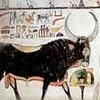
Oxen were another popular dish and evidence from the both the Middle Kingdom pyramid town of Kahun and the workmen's village at el-Amarna shows that pigs were also raised for their meat. Meat could be roasted, boiled or stewed, and would have been a luxury for most Egyptians, usually eaten at festivals or special occasions.
|
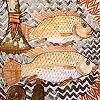
| Usually eaten dried, fish was an important source of nourishment in the peasant diet, often shunned as "unclean" by wealthier Egyptians. Perch, catfish, carp and mullet were all consumed. Once caught, fish were cleaned, cut up, the fish eggs set apart for further treatment, and either dried or eaten boiled, roasted or pickled in brine. |
 |
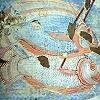 |
The Egyptians usually used nets or spears to catch their fish, and they were the first people to fish for pure pleasure. Nobles are often shown in armchairs, lazily dangling lines into their well stocked garden pools.
Fruit, veg and dairy produce ...
 |
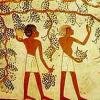 |
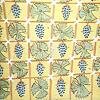
Beans, onions, garlic, leeks, lettuces and cucumbers were amongst the most regular supplies of vegetables available to the Ancient Egyptians. Grapes were used in the making of wine, although this was usually only consumed by the wealthier groups in Egyptian society.
|
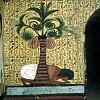
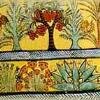
| Gardens were very popular, and were often used to grow fruit trees and crops throughout the year. Various fruits such as dates, figs, grapes, pomegranates, palm nuts, and occasionally almonds were available to the population at large. Although eaten fresh, fruit was also dried in order to preserve it. |
 |
 |
|
 |
Ducks were kept for their eggs and their meat, and from the New Kingdom onwards the Egyptians also kept hens for their eggs and meat too. In addition to being used as a source of meat, cattle and livestock were also used to provide milk for making cheese.
|
The Egyptians were the first people who were known to keep bees. Honey was obtained from both wild and domestic bees, and was often used to sweeten cakes, beer, bread and wine. During the New Kingdom, it is recorded that the workmen of the village of Deir el-Medina, Thebes, kept bees, and that "confectioners" were employed to prepare honey cakes for them.
Discover what the Egyptians used for medicines and healthcare >>
|
|
|


